Naps, Commutes, and Co-Op: The Quiet Rise of America's Two-Hour Gamer
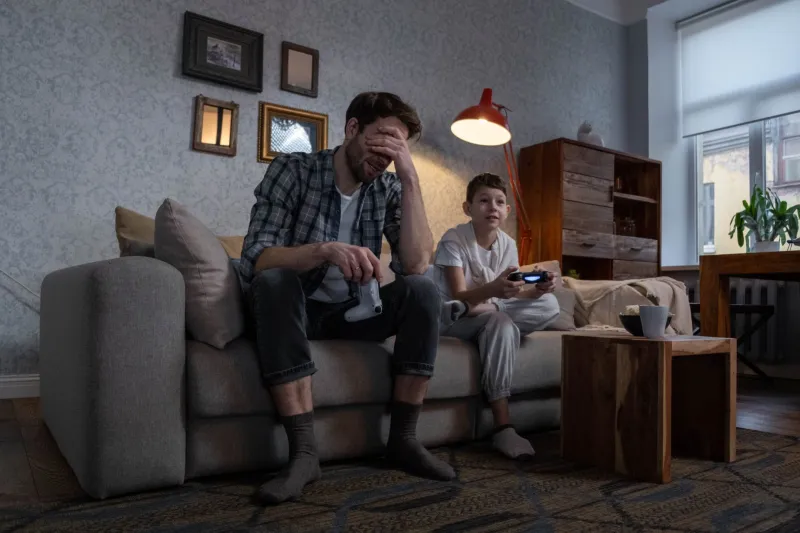
It's 9:47 p.m. on a Tuesday in suburban Ohio. The dishes are loaded, the kids are down, and Marcus has exactly 43 minutes before his body decides the day is over. He doesn't open a 90-hour RPG. He texts two friends, fires up a quick co-op run on his phone, and by 10:30 he's laughing about a botched raid like he's seventeen again.
Welcome to the two-hour gamer lifestyle — except most nights, it's really more like two hours a week.
The Parents Who Refused to Quit
For years, the industry treated parenthood like a subscription cancellation. You had kids, your gaming time evaporated, and you quietly drifted out of the conversation. Census data suggests roughly a third of American adults game regularly while also raising children, and their play sessions look nothing like the marathons gaming culture romanticizes.
Instead of giving up, though, a lot of these players got creative. Nap windows became dungeon runs. Lunch breaks turned into puzzle sessions. The school pickup line is, apparently, a surprisingly good spot for a mobile match — just ask the parents idling in minivans from Atlanta to Portland with a phone propped on the dashboard.
What's changed is that these micro-sessions stopped being a compromise and started becoming the point. A quick game with your college roommate across the country can feel like a standing coffee date. For plenty of parents, that 15-minute check-in is the social calendar.
Developers Finally Noticed
Here's the interesting part: game studios are redesigning around this reality, even if they don't always say so out loud.
The most obvious shift is pause-friendly design. More games now respect the fact that a toddler doesn't care about your checkpoint system. Autosaving happens constantly. Missions are chunked into self-contained segments you can finish between feedings. Mobile co-op titles increasingly let you drop in and out mid-session without tanking the match for everyone else.
There's also a quiet move away from punishing session lengths. Games built around daily 10-minute loops — think cozy farming sims, roguelike runs, word puzzles with async multiplayer — have exploded precisely because they fit inside a lunch break. Some studios now openly market "naptime-sized" content updates, a phrase that would've sounded absurd a decade ago.
Even voice chat has adapted. Push-to-talk and text-based co-op options let a parent play at 10 p.m. without waking the house, which sounds minor until you've spent a year whispering into a headset.
The Attention Economics of a 15-Minute Window
Researchers who study attention describe parents as the ultimate constrained users: high motivation, near-zero slack. Every interruption risks losing progress, so short-session games succeed when they make re-entry painless — clear state, fast load, no lecture about where you left off.
That's the real design revolution. It's not that games got shorter. It's that they got better at remembering where you were, so your brain doesn't burn its only free minutes reconstructing context. A good two-hour gamer can pick up a controller and be fully playing inside 90 seconds. That number matters more than any graphics benchmark.
Making Micro-Gaming Social Instead of Lonely
The knock against casual mobile gaming has always been isolation — one person, one screen, one glowing rectangle at midnight. The parent gaming community has engineered around that too.
Discord servers organized around "after bedtime" raid times. Group chats where friends schedule async turns in strategy games like a slow-motion chess match across time zones. Couples running co-op farms together after the kids crash, trading the controller back and forth on the couch. These low-pressure setups mean you don't need three free hours and a committed squad — you just need to show up, even briefly.
If you're a time-starved player wondering where to start, a few practical ground rules help:
- Pick games with hard session boundaries. Run-based and puzzle games respect your clock; open worlds don't.
- Prioritize async multiplayer. Turn-based games with friends turn gaming into a daily touchpoint instead of a scheduling nightmare.
- Set a hard stop. One more turn is a lie you tell yourself. A timer beats willpower.
- Find your people. Communities built around short sessions — parent gaming groups, casual Discord servers — remove the guilt of not being "hardcore."
Small Windows, Real Lives
The two-hour gamer isn't a lesser version of some past, hardcore self. If anything, they've stumbled into something the industry is only now learning to value: games as a sustainable, social habit rather than a second job.
Marcus will probably never finish that 90-hour RPG. His friends' group chat will keep pinging at 9:45 every night anyway. And honestly? That might be the healthiest way to play.