After the Kids Are Asleep: Meet the Late-Night Gamers Quietly Changing How Games Get Made
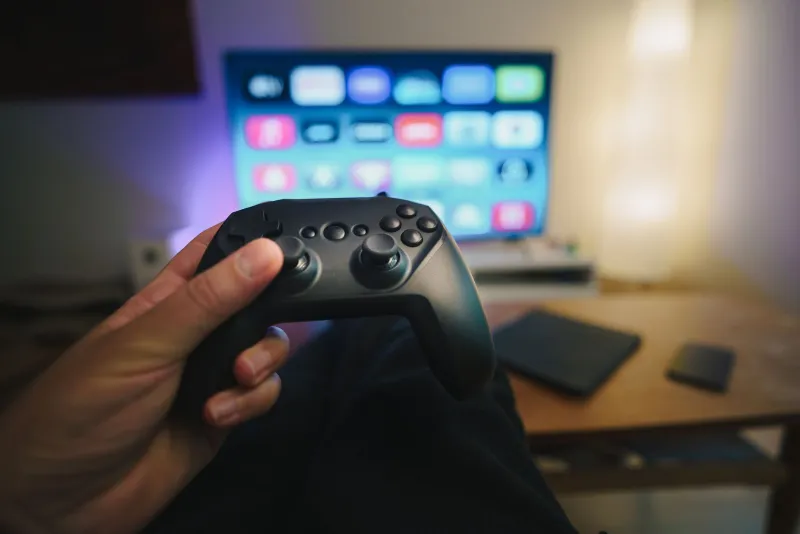
There's a particular kind of silence that hits most American homes somewhere around 9:30 at night. Dishes are done, kids are down, the laptop is finally closed. And for millions of adults, that's when the real session begins.
Welcome to the world of the 10PM gamer — the parents, nurses, truck drivers, and office workers who squeeze their entire gaming life into a three-hour window before bed. They're not a niche. Depending on which industry survey you believe, they're arguably the single biggest block of paying customers in the US market. And for years, almost nobody designed games for them.
The Demographic Everyone Counts but Nobody Designs For
Ask the average game studio who their player is, and you'll get a persona built around a 19-year-old with endless free time. But the spending data tells a different story. The average gamer in the US is in their mid-thirties. They have jobs, mortgages, and a group chat full of other tired adults.
What they don't have is an afternoon to burn. A 90-minute session isn't a quick break for this crowd — it's the whole night. That changes everything about how a game gets experienced.
Think about what happens when a save system assumes you can play for an hour straight. Or a mission structure that locks you into a 45-minute stretch with no checkpoint. For a college student, that's a minor annoyance. For a parent who just spent twenty minutes getting a toddler to sleep, it's a dealbreaker. Quit mid-mission and lose all that progress? Most 10PM gamers will simply put the controller down and open Netflix instead.
Pause-Friendly Is the New Open World
The good news: the industry is finally catching on, and you can see it in the games themselves.
Roguelikes have quietly become the genre of the exhausted. A run in Hades or Slay the Spire takes 30 to 45 minutes, ends on a natural stopping point, and never punishes you for walking away. It's no accident these games dominate Steam charts and handheld consoles — the Steam Deck and Nintendo Switch are basically 10PM gamer machines, built for couch play after the house goes quiet.
Live service games are adapting too. Session-based shooters like Marvel Rivals or Rocket League understand the assignment: matches run 5 to 15 minutes, and you can bail between rounds without torching your team. Compare that to the old MMO raid model, where you were expected to commit four hours a night, three nights a week, with a fixed schedule. That model didn't die because people stopped loving MMOs. It died because its audience grew up and had kids.
Even the big budget side is shifting. Save-anywhere options, generous checkpoints, and quest structures you can complete in bite-sized chunks are showing up in franchises that would never have bothered a decade ago. When Baldur's Gate 3 became a phenomenon, a lot of the discourse focused on its scope. But plenty of players finished that hundred-hour epic in 40-minute increments, one late night at a time.
The Platforms Are Listening (Sort Of)
Hardware is changing along with the games. The Steam Deck, the ROG Ally, and the Switch's sleep-mode wizardry all exist because adults want to play in stolen moments — a few rounds before bed, a level in bed, then lights out.
Cloud gaming and quick-resume features matter more to this crowd than raw graphics. Being able to suspend a game mid-boss, put the console to sleep, and pick it up two days later exactly where you left it? That's not a convenience feature anymore. For the after-hours crowd, it's the whole product.
Streaming platforms have noticed too. Xbox's cloud saves and cross-progression mean you can start something on the TV after dinner and finish it on a handheld without losing a step. That's not a perk for the hardcore — that's infrastructure built around a life with no predictable free time.
Why This Invisible Audience Punches Above Its Weight
Here's the part that should get every publisher's attention: late-night adults don't just play games. They buy them. Consistently. Without waiting for a deep sale.
A 22-year-old with a huge backlog and a tight budget waits for a discount. A 38-year-old with a full-time job sees a game that respects their limited hours, and they buy it at launch on a Tuesday night. Time is the scarcest resource in their life, and they'll happily pay full price to anyone who treats it that way.
That's why the industry's smartest recent successes — from cozy sims to tight roguelikes to 12-hour narrative games — all share a common thread. They fit into a life, instead of demanding you pause your life to fit them in.
The Window Isn't Going Anywhere
None of this means the 10PM gamer wants dumbed-down games. Plenty of them crave deep, challenging experiences — they just need those experiences to respect the clock. The winning formula isn't "easier." It's "resumable."
So if you're one of the millions who game exclusively after the world goes quiet: you're not a casual, and you're not a leftover audience. You're the market. The games are finally starting to figure that out — one checkpoint, one quick-resume, one perfectly sized session at a time.
Now go to bed. You've got work in the morning.