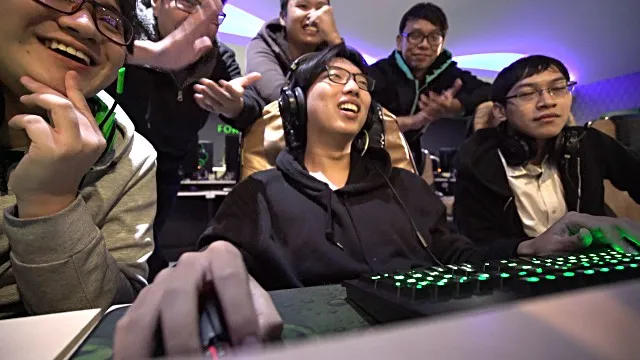
Living Room Legends: The Unexpected Comeback of Games Built for the People Right Next to You
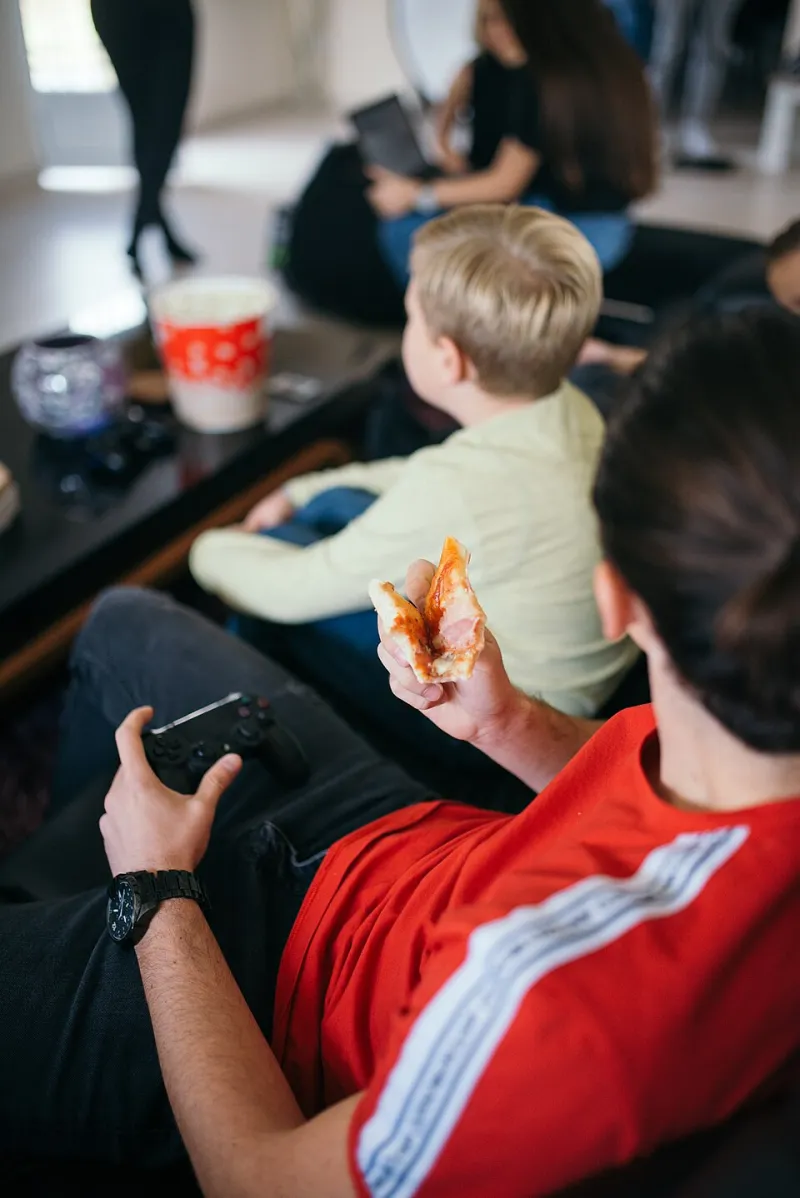
Photo: Nenad Stojkovic, CC BY 2.0, via Wikimedia Commons
For a while there, it felt like the gaming industry had made up its mind. Online multiplayer was the future, split-screen was a relic, and if your friends weren't connected through a headset, they basically didn't exist. Publishers were cutting local co-op modes to save on development costs. Consoles were quietly dropping features that required two controllers plugged into the same machine. The message seemed clear: go online or go home.
Except — people went home. And they brought their friends.
Something has shifted in the last couple of years, and it's not subtle once you start paying attention. A wave of games built specifically for the shared-screen, same-couch experience is hitting the market, and players are responding with genuine enthusiasm. Whether it's a lazy Sunday with roommates or a family game night that doesn't end in a board game argument, local co-op is back — and this time it feels like it's here to stay.
What Killed Local Co-Op the First Time (And Why That's Changed)
The decline of local multiplayer wasn't accidental. When broadband internet became a household staple in the mid-2000s, game studios saw an opportunity to monetize online infrastructure — subscriptions, DLC, battle passes. Designing a game for two people on the same couch didn't fit neatly into that model. You couldn't charge two players separately if they were sharing one console.
But the cultural math has shifted. The pandemic, for all its obvious awfulness, reminded a lot of Americans that physical togetherness has a value that a Discord call simply cannot replicate. People rediscovered board games, card games, and — critically — video games they could play with whoever was actually in the apartment with them. That appetite didn't disappear when restrictions lifted.
At the same time, indie studios started noticing that local co-op titles were punching way above their weight on platforms like Steam and Nintendo's eShop. Games like It Takes Two, Overcooked, and Moving Out weren't just selling well — they were generating the kind of word-of-mouth that money can't really buy. People were filming themselves playing together, posting the chaos on TikTok and YouTube, and turning these titles into cultural moments.
Publishers noticed. And slowly, local co-op stopped being a cut feature and started being a selling point again.
The Psychology of Playing Next to Someone
Here's something that doesn't get talked about enough: there's a genuine psychological difference between playing a game online with a friend versus playing it with that same friend sitting two feet away from you.
When you're online, you're processing the game and communicating at the same time through a pretty limited channel — voice chat, maybe text. But when you're in the same room, you're reading body language, sharing snacks, reacting to each other's faces when something goes wrong. You're fully present in a shared experience.
Researchers who study social bonding have noted that synchronized activities — doing the same thing at the same time — tend to strengthen relationships more effectively than just talking. Gaming together in person hits that note. When you and a friend both panic at the same moment in a co-op boss fight, that shared spike of adrenaline becomes a memory you actually keep.
That's something an online session, even a great one, struggles to replicate. The latency isn't just network latency — it's emotional latency too.
The Titles Actually Leading This Charge
So which games are making the case for local co-op right now? The list is more diverse than you might expect.
On the indie side, titles like Lovers in a Dangerous Spacetime, Unravel Two, and the Cuphead series have built devoted followings by making cooperative play feel genuinely purposeful — not just tacked on. These aren't games where a second player is an afterthought. They're designed from the ground up around two people solving problems together.
Then there's the retro-inspired wave. Games like Streets of Rage 4 and Teenage Mutant Ninja Turtles: Shredder's Revenge tapped directly into the nostalgia of arcade-style beat-em-ups that practically invented local co-op as a concept. They're not just trading on old memories, though — they're genuinely excellent games that introduced the format to players who were too young to remember the originals.
On the AAA side, the comeback is real but more cautious. It Takes Two — which won Game of the Year at The Game Awards — arguably did more to legitimize the format at a mainstream level than anything else in recent memory. Its director, Josef Fares, practically made local co-op his personal mission statement. More recently, franchises that had abandoned split-screen are quietly bringing it back, recognizing that it's now a feature players specifically ask for.
Even Nintendo, who never fully abandoned the format, has doubled down with titles across the Switch library that treat local play as a first-class feature rather than a checkbox.
What Developers Are Actually Saying
Talk to indie developers about why they build for local co-op and you hear a consistent theme: it's about creating a complete emotional arc that players share together. It's harder to design — you have to account for two players with potentially different skill levels, different attention spans, different tolerances for frustration — but the payoff is a game that people remember not just as a game, but as an experience they had with someone they care about.
That's a different value proposition than most online multiplayer titles can offer. Online games often sell the thrill of competition or the grind of progression. Local co-op, at its best, sells something closer to connection.
Some studios are also being practical about it. A game with strong local co-op generates content. Streamers and creators love playing these titles because the on-screen chaos and real-time reactions make for genuinely entertaining video. That organic visibility is worth a lot in a crowded market.
Where This Is All Heading
The honest answer is that local co-op is probably never going to fully reclaim the cultural dominance it had in, say, 1995. Online gaming is too deeply embedded in how people play now, and that's not going away.
But it doesn't need to dominate to matter. What's happening right now feels less like a revolution and more like a correction — the market finding a healthier balance between the two modes. There's room for both, and increasingly, developers seem to understand that.
For players, the practical upshot is simple: if you've got people in your life who are willing to share a couch and a controller, there has never been a better time to find something to play together. The library is growing, the quality is genuinely high, and the experience of playing next to someone — laughing, arguing, celebrating — is one that no amount of online infrastructure can fully replace.
Plug in that second controller. Your living room is a better gaming venue than you might think.