Same Couch, Same Screen, Way More Fun: Local Multiplayer Is Back and Better Than Ever
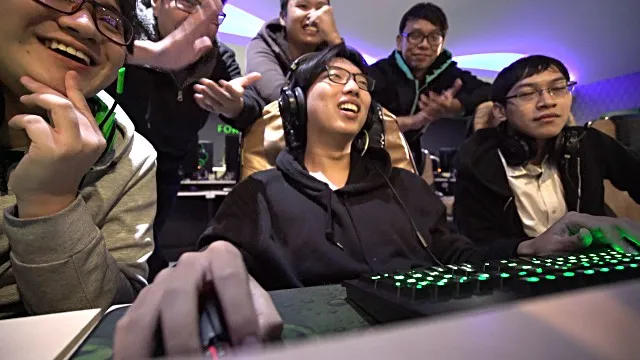
Photo: Lyncconf Games, CC BY-SA 4.0, via Wikimedia Commons
There's something that happens when you hand a controller to the person sitting next to you. The trash talk gets louder. The laughter gets real. And for a few hours, your phone stops existing. That feeling — the one that defined gaming sleepovers and living room tournaments throughout the '90s and 2000s — quietly disappeared for about a decade. But it's coming back, and honestly? It never should have left.
Local multiplayer, long dismissed as a relic of the cartridge era, is having a genuine moment right now. Game studios, indie developers, and even major publishers are pouring resources back into split-screen and couch co-op experiences. The reasons are a mix of nostalgia, online fatigue, and a growing hunger for the kind of social connection that a Discord call just can't replicate.
How We Got Here: The Online-Only Hangover
Let's rewind a bit. When broadband internet became a household staple in the mid-2000s, the industry made a collective decision: online multiplayer was the future, and local play was the past. Split-screen modes got cut to save development time. Couch co-op was quietly dropped from sequels that used to feature it. Publishers chased the massively multiplayer dream, and for a while, it made sense.
But somewhere between the battle passes, the server outages, the toxic lobbies, and the endless grind cycles, a lot of players burned out. Online gaming can be isolating in a way that feels almost paradoxical — you're technically playing with millions of people, but you're doing it alone in a room. The pandemic accelerated this exhaustion. People wanted actual togetherness, not just a headset and a ping rate.
By 2022 and into 2024, the data started telling a different story. Games with strong local multiplayer components were moving serious units. It Takes Two swept game-of-the-year awards and sold over 10 million copies. Overcooked! became a staple at house parties. Nintendo's continued commitment to couch-friendly titles kept the Switch flying off shelves. The market was sending a clear message.
The Indie Developers Who Saw It Coming
While the big studios were slow to pivot, indie developers never really abandoned local play. They just needed the audience to catch up.
Small studios have been quietly building couch co-op experiences for years, often citing the same reason: they wanted to make games their friends and family could actually play together. Games like Lovers in a Dangerous Spacetime, Pode, and Unrailed! found dedicated audiences precisely because they offered something online-only titles couldn't — a shared physical experience.
Developers in this space will tell you that designing for local play forces a kind of intentionality that online design doesn't. You can't hide bad mechanics behind lag excuses. You can't blame a disconnection. The game has to be fun right there, in that room, with those people. That constraint, oddly enough, tends to produce tighter, more thoughtful design.
The indie scene is also capitalizing hard on nostalgia without being lazy about it. Rather than just remaking old-school brawlers, studios are building games that feel like the couch experiences of the past while incorporating modern design sensibilities — better onboarding, more accessibility options, and visual polish that holds up on a 65-inch 4K TV.
Which Modern Games Are Leading the Charge
So what should you actually load up the next time you've got friends over? The options right now are genuinely impressive.
It Takes Two remains the gold standard for cooperative local play. It's a game that demands communication, patience, and genuine collaboration — which makes it both a relationship test and a relationship builder, depending on how the night goes.
Teenage Mutant Ninja Turtles: Shredder's Revenge proved that the old-school brawler genre could come roaring back with the right love and attention. Up to six players, gorgeous pixel art, and enough nostalgia to make any millennial lose their mind.
Moving Out 2 took the chaotic physics comedy of its predecessor and cranked everything up. It's the kind of game where you're yelling at your friend in the best possible way.
Brotato and other roguelike entries have found clever ways to incorporate local co-op into genres that historically felt solo-only.
Even larger studios are paying attention. Microsoft has leaned into its "play anywhere" philosophy in ways that actually benefit local players, and Nintendo continues to treat couch multiplayer as a first-class feature rather than an afterthought.
Why Studios Are Finally Investing Again
The business case for local multiplayer has shifted. For years, the conventional wisdom was that online multiplayer meant more engagement hours, more potential for live-service revenue, and a bigger long-term player base. Local play, by contrast, seemed like a dead end — you make the game, people play it, done.
But the live-service model is showing serious cracks. Players are increasingly resistant to endless monetization loops. Retention is harder than ever. And in a crowded market, a game that creates genuine word-of-mouth — the kind that comes from someone telling their friend "you have to come over and play this with me" — is worth its weight in marketing budget.
Couch co-op games generate that organic buzz in a way that online titles rarely do. They become events. People plan around them. They get brought out at parties, family gatherings, and game nights. That kind of staying power is something no amount of battle pass content can manufacture.
The Social Layer Nobody's Talking About
Here's the part that doesn't show up in sales charts but matters just as much: people are lonely. It's not a gaming-specific observation — it's a documented public health trend in the United States. And while gaming often gets blamed for contributing to social isolation, local multiplayer does something genuinely valuable. It creates low-pressure, structured social time.
You don't have to make conversation for two hours straight. The game does the heavy lifting. You're laughing, competing, cooperating — and before you know it, you've spent quality time with people you care about without anyone staring at their phone.
That's not a small thing. And it's a big part of why couch co-op isn't just a gaming trend — it's a cultural one.
What to Expect Going Forward
The momentum here feels real and sustained, not a flash-in-the-pan nostalgia cycle. More studios are announcing local multiplayer features at reveal events. Indie funding is flowing toward cooperative experiences. And players are actively seeking out titles that let them share a physical space and a screen.
If you haven't dusted off the extra controllers lately, now's a genuinely great time to do it. The couch is waiting.