Why Millions of Gamers Are Happy Just Watching Someone Else Hit the Start Button

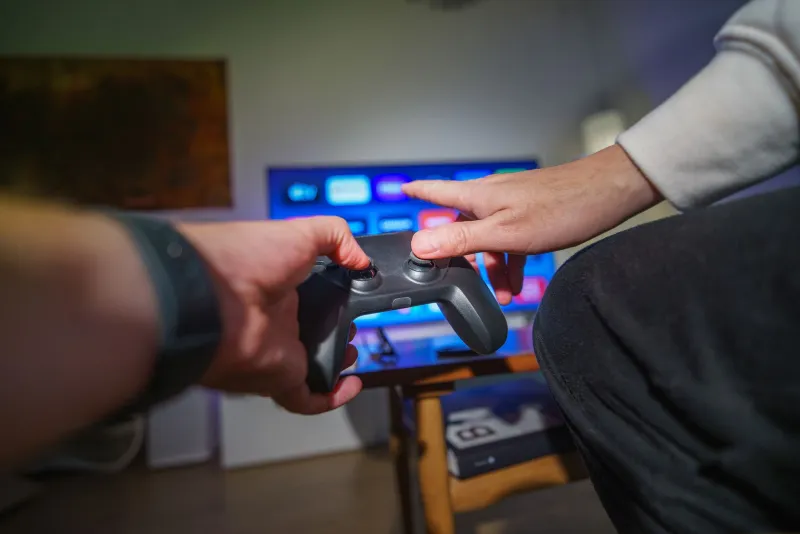
Photo by Photo by Sam Pak on Unsplash on Unsplash
Picture this: it's a Saturday afternoon, you've got snacks, you're locked in — and you haven't touched a controller once. You're watching someone else tear through a 20-year-old RPG in under four hours, skipping cutscenes, clipping through walls, and pulling off tricks that shouldn't be physically possible inside a video game. And honestly? You're having a great time.
This isn't some niche behavior anymore. Watching other people play video games has quietly grown into one of the dominant forms of entertainment in the US, and it's forcing a real conversation about what gaming actually is at this point. Is it a hobby you do, or a spectacle you consume? For a growing number of people, the answer is leaning hard toward the latter.
The Numbers Don't Lie
Twitch, YouTube Gaming, and Kick collectively pull in hundreds of millions of hours of watch time every single month. Major speedrunning events like Games Done Quick — which raises millions for charity during its bi-annual marathons — routinely draw peak viewership that rivals cable sports broadcasts. The League of Legends World Championship has filled stadiums and broken streaming records more than once. These aren't flukes. They're indicators of a full cultural category that's matured well past "people watching other people play video games" into something that deserves its own name.
Call it competitive viewing. Call it spectator gaming. Whatever label sticks, the behavior is real and it's only getting bigger.
What Makes Watching So Compelling
Here's the thing — there are actually a bunch of different reasons people tune in, and they're not all the same. For speedrunning fans, it's about witnessing mastery. Watching a runner navigate a game like Super Mario 64 or The Legend of Zelda: Ocarina of Time at an inhuman level taps into the same part of your brain that watches Olympic gymnastics. You know what's supposed to happen, and you're floored when someone bends the rules that far.
For esports viewers, it's closer to traditional sports fandom. You've got your team, your rivalry, your storylines built across seasons. Games like Valorant, CS2, and Rocket League have developed legitimate competitive ecosystems with rosters, trades, and fan drama that mirrors what you'd find following the NFL or the NBA.
And then there's the content creator lane, which is its own whole universe. Streamers like Pokimane, Ludwig, or xQc aren't just playing games — they're performing. The game is almost secondary to the personality, the community chat, the running jokes, and the parasocial relationship viewers build over months or years of watching. The game is the backdrop. The streamer is the show.
What This Is Doing to Game Design
Studios have absolutely noticed. Games are increasingly being built with a viewing audience in mind, not just the person holding the controller. Developers think about moments that look spectacular on stream — big boss reveals, dramatic story beats, visually wild mechanics that make a clip go viral. Some games now include dedicated "streamer modes" that swap out licensed music to avoid copyright issues during broadcasts. Others design their pacing around the idea that thousands of people might be watching a single playthrough at once.
This isn't inherently bad, but it does create some interesting tension. A game designed to be watched isn't always the same as a game designed to be played. When the priority shifts toward spectacle and shareable moments, quieter, more introspective experiences can get deprioritized. The games that reward patience and personal discovery don't always make for great content. And in a world where a game's commercial success can hinge on whether it pops off on Twitch during launch week, that calculus matters.
The "I'll Just Watch a Playthrough" Phenomenon
There's also a more personal version of this shift happening in living rooms across the country. More people are openly admitting that they'd rather watch a full playthrough of a story-heavy game on YouTube than actually sit down and play it themselves. Time is the obvious factor — a 40-hour RPG is a serious commitment, but a well-edited YouTube series can get you through the same story in a weekend of background viewing.
But it's not just time. Some people genuinely enjoy the guided, social experience of watching someone react to a game's story beats alongside them. It's the difference between reading a book alone and watching a movie with friends. The communal energy changes the experience entirely.
And honestly? For a lot of games — especially ones where the narrative is the main draw — this might just be a completely valid way to engage with the content. Not every experience needs to be hands-on to be meaningful.
Does This Mean Gaming Is Changing Forever?
Short answer: yeah, probably. The longer answer is that "gaming" as a cultural category has already expanded way beyond what it meant 20 years ago. It now includes playing, watching, competing, collecting, modding, theorizing, and a dozen other behaviors. The idea that real gamers only count if they're actively pressing buttons is getting harder to defend when millions of people are building entire social lives around games they've never personally booted up.
That said, there's still something irreplaceable about actually playing. The hands-on feedback loop, the personal challenge, the ownership over a story's outcome — those things don't fully translate through a screen. Watching someone else nail a difficult boss fight is satisfying in its own way, but it's a different satisfaction than doing it yourself.
The most interesting thing about where gaming sits right now is that it doesn't have to be one or the other. You can spend a week watching speedruns, then pick up a controller for the first time in months and feel that old spark. The two modes of engagement are feeding each other more than they're competing.
The Bottom Line
Watching games has earned its seat at the table. It's not a lesser form of engagement — it's just a different one, and for a lot of people in a lot of situations, it's the one that fits their life. Whether you're catching a Games Done Quick marathon at 2 AM, following an esports team through a playoff run, or just pulling up a streamer's VOD while you eat lunch, you're participating in something that's genuinely reshaping entertainment culture.
The play zone has gotten a lot bigger than the controller ever covered.